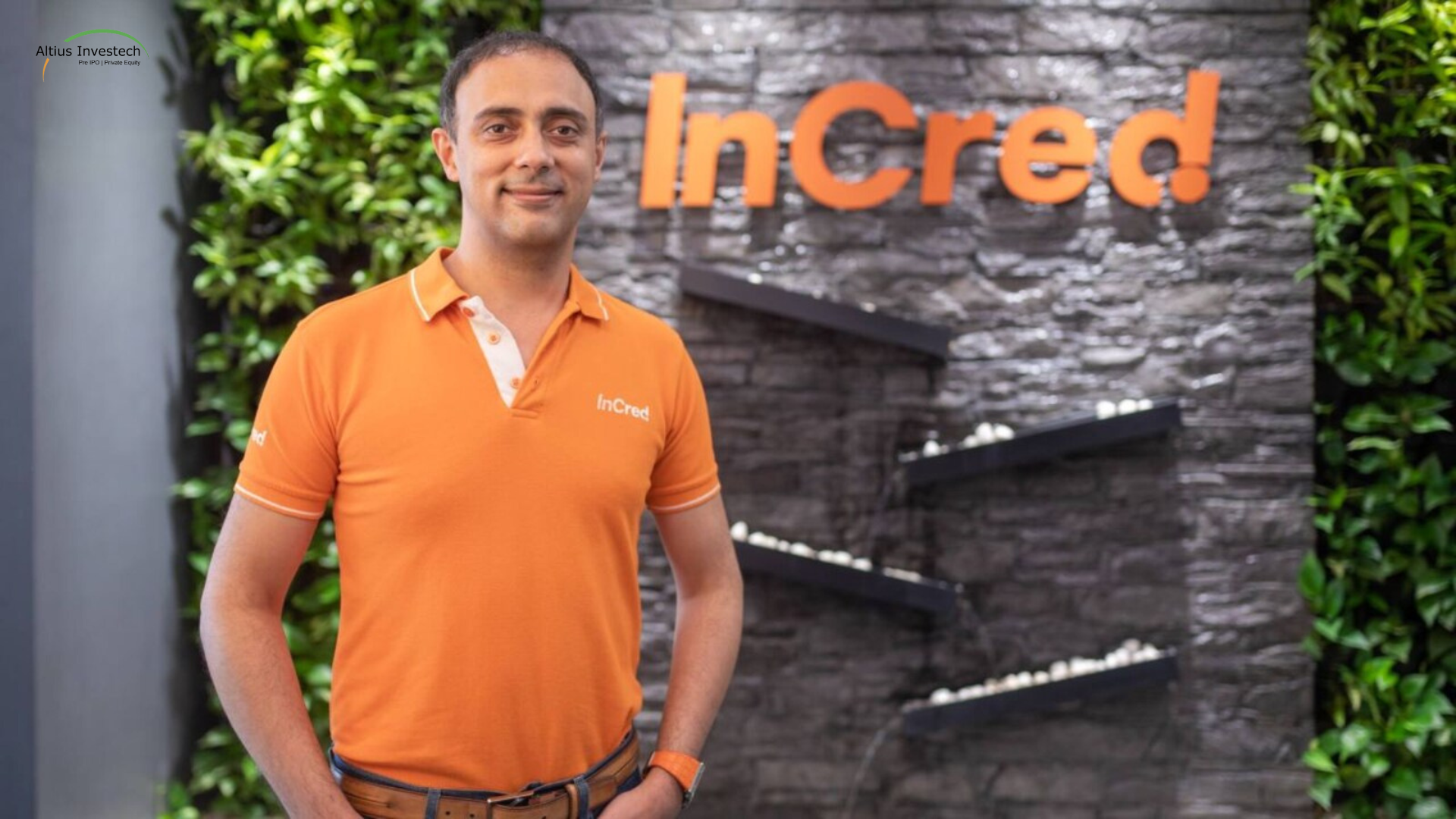
InCred Holdings is printing money. With its Asset Under Management (AUM) surging past ₹12,585 crore and a massive ₹1,873 crore in FY25 revenue, the KKR-backed unicorn has quietly built an empire in the shadow of legacy banks. In February 2026, the Securities and Exchange Board of India (SEBI) gave the green light to its confidential IPO filing, paving the way for a ₹3,000 to ₹4,000 crore public listing. But behind the 47% revenue jump lies a structural tension: EBITDA margins have slipped from 70% to 61% as operating costs swell. As InCred prepares for one of the biggest financial sector IPOs of the year, the market is asking a critical question: Is this a durable lending engine, or is it peaking just as the RBI tightens the screws on unsecured credit?
The Business: More Than Just a Lender
Founded in 2011 by former Deutsche Bank executive Bhupinder Singh, InCred Holdings operates essentially as a three-headed financial beast:
- InCred Finance: The core lending NBFC focused on personal, education, and SME loans. (This arm significantly expanded its balance sheet following a strategic 2021 merger with KKR India Financial Services).
- InCred Capital: The institutional wealth management and investment banking arm.
- InCred Money: The retail-focused wealth-tech platform distributing alternative investments and retail bonds.
This diversified structure—blending high-yield unsecured lending with fee-generating wealth management—is exactly what helped the company achieve Unicorn status in late 2023 following a ₹500 crore Series D round led by Ranjan Pai.
The Financial Reality: High Growth, Rising Costs
In the private market, InCred’s financials command serious attention, but they also reveal the cost of aggressive scaling.
- The Topline Explosion: FY25 Net Revenue jumped by 47.2% to ₹1,873.62 crore (up from ₹1,272.70 crore in FY24).
- The Bottom Line: Profit After Tax (PAT) climbed 20.7% to ₹373.15 crore.
- The Margin Squeeze: Despite the impressive top-line growth, Net Profit Margins actually eased slightly from 23.6% in FY24 to around 19.9% in FY25. Similarly, EBITDA margins softened. As the company scales its physical branch network (now over 140 branches) and employee base, operating expenses are aggressively eating into the gross spreads.
- Asset Quality: Crucially, InCred has maintained a remarkably tight ship, reporting a Net NPA of just 0.7% and a strong capital adequacy ratio of 26%.
The IPO Focus: The Confidential Play
InCred took the “confidential filing” route for its Draft Red Herring Prospectus (DRHP) in late 2025—a strategic move that allows companies to quietly test the waters with regulators before opening their books to public scrutiny.
Having secured SEBI approval in February 2026, the massive ₹3,000–₹4,000 crore issue will likely feature a ₹1,500 crore fresh issue to augment capital, alongside an Offer for Sale (OFS) allowing early backers like KKR to trim their stakes.
In the unlisted market, platforms like Altius Investech show shares trading in the ₹150–₹200 range. At current grey market levels, the company is commanding a market capitalization of roughly ₹10,700 crore, translating to a Price-to-Earnings (P/E) ratio of ~28.6x and a Price-to-Book (P/B) of around 2.8x. This places it at a premium compared to older, traditional NBFCs, reflecting its “fintech” valuation halo.
The NBFC Space: Navigating the RBI’s Radar
Timing an IPO in the current NBFC environment is treacherous. The Reserve Bank of India (RBI) has grown increasingly uncomfortable with the systemic risks of unsecured retail lending—InCred’s historical bread and butter.
Rising borrowing costs for NBFCs mean that margins will face continuous pressure. The market is currently rewarding lenders who possess two strict characteristics: heavily diversified funding access and a pivot toward secured loan books. InCred’s recent push into secured SME lending and wealth management is a direct attempt to de-risk its portfolio before the public market dissects it.
The Verdict: Strong Candidate or Overhyped?
InCred Holdings is far from overhyped, but it is priced for perfection. A 33% Return on Equity (ROE) and a ₹12,500 crore AUM prove it is a legitimate powerhouse. However, public market investors will not treat it as a limitless tech startup. They will judge it as a traditional lender navigating an elevated interest rate cycle.