Effective April 1, 2026, the Indian food and beverage industry enters a transformative era as a new government mandate requires food-grade packaging to contain at least 40% recycled content. This directive shifts sustainability from a voluntary goal to a legal necessity, institutionalizing the adoption of Recycled PET (rPET) to curtail reliance on virgin plastics.
This mandate serves as a structural tailwind for Pashupati Polytex, potentially elevating the company from a recycling partner to a mission-critical infrastructure provider. Following its recent corporate amalgamation and a notable turnaround in its financial trajectory—supported by a substantial capital infusion—the company might emerge as an indispensable linchpin for the FMCG sector’s compliance. By bridging the gap between waste collection and certified food-safe material supply, Pashupati Polytex appears uniquely positioned to lead this mandatory transition toward a circular economy.
Company Overview
Pashupati Polytex Private Limited is a part of the Pashupati Group and operates in the polymer recycling and manufacturing space, with a focus on polyester-based products and sustainable processing solutions.
- Incorporated in 2009, the company is engaged in manufacturing polyester staple fibre (PSF), PET flakes, and related recycled polymer products
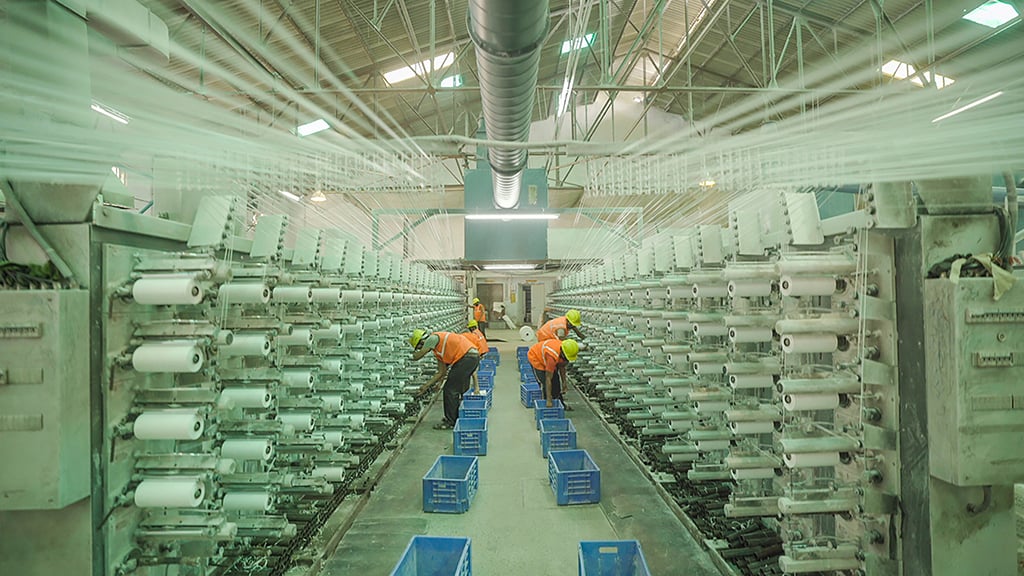
- Operates across the plastic recycling value chain, converting waste materials into usable industrial and textile-grade outputs
- Focuses on continuous technology upgradation and process efficiency to enhance product quality and operational performance
- Strengthened its business through strategic amalgamation of group entities, improving scale, integration, and market presence
- Has raised capital via private placements to support expansion and long-term growth initiatives
- Maintains an integrated structure with subsidiaries supporting manufacturing and processing capabilities
- Emphasizes sustainability through recycling, waste reduction, and environmentally responsible production practices
- Continues to expand its market reach while focusing on operational efficiencies and customer engagement
Financial Snapshot

Insights
- Total operating costs increased in line with business growth
- Other income increased compared to the previous year
- Depreciation and amortization expense remained largely stable
- Finance costs declined year-on-year
- Income tax expense remained broadly unchanged
- Minority interest impact reduced to zero in the current yea
How the Mandate Changes the Game for Pashupati Polytex
The shift from 0% or voluntary recycling to a 40% mandatory floor creates a fundamental shift in Pashupati’s business model. Here is the detailed breakdown:
1. Exponential Demand for Food-Grade Resins
Before this mandate, food-grade rPET was a “premium” choice. Now, it’s a necessity. Pashupati Polytex is one of the few domestic players with the decontamination technology required to make plastic safe enough to touch food. They are no longer competing with cheap, low-quality recyclers; they are competing in a high-entry-barrier market where demand currently far outstrips supply.
2. Significant Margin Expansion
Historically, recycled plastic was often sold at a discount to virgin plastic to attract buyers. However, because the mandate forces demand, rPET is now decoupling from virgin PET prices. Pashupati can command a “sustainability premium” for their certified granules. Moving their product mix away from textile-grade flakes (lower margin) toward food-grade pellets (higher margin) will likely lead to a much healthier bottom line.
3. Strengthening the “Collector-to-Converter” Moat
Pashupati has a massive collection network across India. The 40% mandate makes waste feedstock the new “gold.” Because Pashupati controls the collection (the raw material) and the processing (the technology), they are shielded from the supply shocks that might hit smaller converters who have to buy their waste from third parties.
4. EPR Credit Monetization
Under the Extended Producer Responsibility (EPR) framework, Pashupati generates credits for every ton of plastic they recycle. As brand owners (like Uflex or beverage companies) struggle to meet their 40% targets, the value of these EPR certificates is expected to skyrocket. This provides Pashupati with a secondary, high-margin revenue stream simply for doing what they already do.
5. Strategic “Lock-in” with Packaging Giants
With supply continuity now a major risk for global brands, Pashupati’s FDA-approved capacity makes them an indispensable partner. They are perfectly positioned to sign multi-year, “preferred supplier” contracts with major converters and brand owners, ensuring stable, predictable cash flows for years to come.
Conclusion
The 40% mandate is a strategic “gold mine” for Pashupati Polytex. Following its major corporate amalgamation and a significant shift from past losses to profitability, the company has emerged financially revitalized. Armed with a substantial capital infusion, it is now perfectly positioned to scale its food-grade capacity and lead the market as an indispensable partner for global brand owners.