
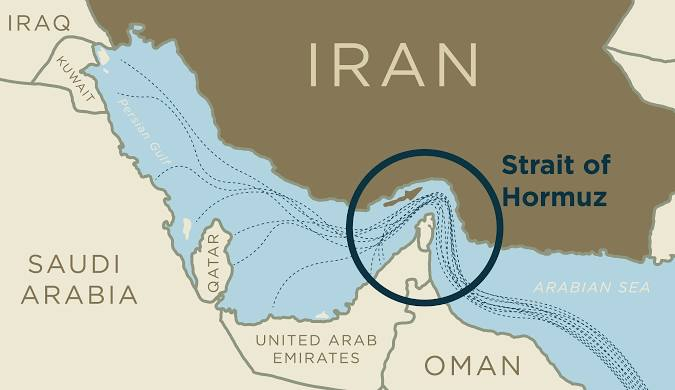
For seven weeks, the global economy has been held hostage by a 21-nautical-mile stretch of water. The conflict between the United States, Israel, and Iran sent Brent crude skyrocketing to a peak of $126 a barrel, wiped out 70% of shipping traffic through the Middle East, and resurrected the ghost of runaway inflation just as central banks thought they had it cornered.
Now, with a fragile ceasefire in place as of mid-April and the Strait of Hormuz declared “completely open” by Tehran, the market is breathing a collective, if cautious, sigh of relief. Equities have rallied, and oil has plunged back below the $100 mark.
But for investors, the story isn’t over. The whiplash of the last two months has fundamentally rewired market psychology. To understand where your money should be moving tomorrow, we have to dissect exactly what happened over the last 48 days.
Here is the complete story of the 2026 Iran-US War, the Hormuz chokepoint, and the market’s relief rally—by the numbers, and the narratives.
The Spark: February 28 and the Escalation
The modern global economy is a delicate machine, and on February 28, 2026, a wrench was thrown directly into its gears.
The crisis began when the U.S. and Israel launched an unprecedented air campaign against Iran, culminating in the assassination of Iran’s supreme leader, Ali Khamenei. The geopolitical shockwaves were immediate. In retaliation, Iran fired salvos of missiles and drones at Israel, U.S. military bases, and U.S.-allied Gulf states.
But the true economic weapon in Tehran’s arsenal wasn’t ballistic; it was geographical.
On March 4, Iran’s Islamic Revolutionary Guard Corps (IRGC) officially declared the Strait of Hormuz “closed.” They backed the threat with 21 confirmed attacks on merchant vessels, a sunken tugboat, and the reported laying of sea mines.
For the uninitiated, the Strait of Hormuz is the jugular vein of the global energy trade. It connects the Persian Gulf to the Gulf of Oman and the Arabian Sea. Nearly one-fifth of the world’s traded oil and liquefied natural gas (LNG) flows through it daily. When Iran locked the gates, the global energy supply chain effectively froze.
The Chokepoint: Panic in the Markets
The reaction from the shipping industry was instantaneous and severe.
Major container shipping companies suspended transits entirely. Maritime traffic through the strait dropped by 70% almost overnight. Over 150 massive cargo ships and tankers simply dropped anchor outside the strait, waiting for a resolution that seemed impossible. Combined with Houthi-controlled Yemen resuming attacks in the Red Sea, Suez Canal traffic was forced to reroute around Africa’s Cape of Good Hope, adding weeks to transit times and sending shipping costs to the stratosphere.
The Quantitative Fallout
The closure triggered an immediate panic in the commodities sector. Here is what the damage looked like on paper:
- The Crude Spike: Brent crude, the international benchmark, was trading comfortably at $71.32 per barrel on February 27. By March 8, it had blown past $100 for the first time in four years, eventually peaking at a staggering $126 per barrel. It was the largest monthly increase in oil prices in the history of the world oil market.
- The Pump Pain: In the U.S., gasoline prices shattered the psychological $4-per-gallon wall, rising 34% in a matter of weeks, while diesel surged 42%.
- The Windfall: While consumers bled, Big Oil feasted. According to industry analyses, the world’s top 100 oil and gas companies banked an estimated $23 billion in unearned windfall profits in March alone. That breaks down to an extra $30 million in pure profit every single hour. Saudi Aramco, ExxonMobil, and Gazprom were the biggest beneficiaries of this chaos, generating massive free cash flow as prices held an average of $100 through the month.
The Indian Impact: For India, which imports 85% of its oil and relies heavily on the Gulf for its LPG, the 48-day chokehold was an existential stress test. As crude procurement costs spiked from ₹5,800 to ₹9,500 per barrel and domestic LPG deliveries faced severe rationing, household kitchens across tier-2 cities scrambled. Yet, Dalal Street offered a stunning display of structural resilience; despite foreign portfolio investors (FPIs) dumping over ₹1.61 lakh crore in equities out of panic, domestic mutual funds powered by relentless retail SIPs—absorbed the massive shock, allowing the Sensex to bounce back to all-time highs the moment the strait reopened.
The April Ultimatum: Blockades and Brinkmanship
As March bled into April, the market was gripped by violent volatility. Brent crude would swing 5% to 7% in a single session based on a single headline or leaked rumor.
The U.S. administration, under President Donald Trump, began issuing hardline ultimatums. On March 22, Trump threatened to target Iranian power plants if the strait was not opened. By mid-April, following the initial failure of the Islamabad peace talks, the U.S. Navy announced it would blockade Iranian ports and begin forcibly clearing the strait of mines.
The threat of a prolonged naval blockade sent insurance premiums for maritime trade into the stratosphere. London insurers were forced to launch a $1 billion war-cover facility just to keep the skeletal remains of Gulf shipping viable.
At this point, analysts estimated that between 500 million and 1 billion barrels of oil were physically trapped behind the Hormuz bottleneck. The market was pricing in a catastrophic scenario where Brent crude could touch $150 a barrel if the standoff lasted into May.
The Breather: A Fragile Ceasefire
Then, the fever broke.
On April 17, after intense back-channel negotiations and the looming reality of mutual economic destruction, a tentative ceasefire was reached. Iran’s foreign ministry announced that the Strait of Hormuz was “completely open” for commercial vessels. The U.S. maintained its blockade on Iranian-flagged vessels but allowed international shipping to resume transit. Furthermore, mine-clearing operations commenced.
The market reaction was swift and decisive:
- Oil Plummets: The speculative premium vanished in hours. Brent crude immediately dropped roughly 9%, slipping below the $100 mark to settle around $95. U.S. West Texas Intermediate (WTI) followed suit, dropping to the $87 range.
- Equities Rally: Global stock markets, which had been battered by the dual threats of a widened war and spiking energy costs, staged a massive relief rally. The S&P 500 and the TSX both saw substantial gains as tech and consumer discretionary stocks were bought back up.
The Bottom Line
The 2026 Iran-US war was a masterclass in global economic fragility. It proved that in the modern world, geography is destiny, and a few submerged sea mines can dictate the cost of a gallon of milk in Ohio.
The immediate panic has subsided, and the algorithms have stopped pricing in Armageddon. But the structural vulnerabilities exposed by the 48-day closure of the Strait of Hormuz will reshape energy policy, supply chain logistics, and inflation metrics for the rest of the decade. As an investor, the worst thing you can do right now is assume the crisis is over just because the boats are moving again. The water is open, but the tide has permanently shifted.