
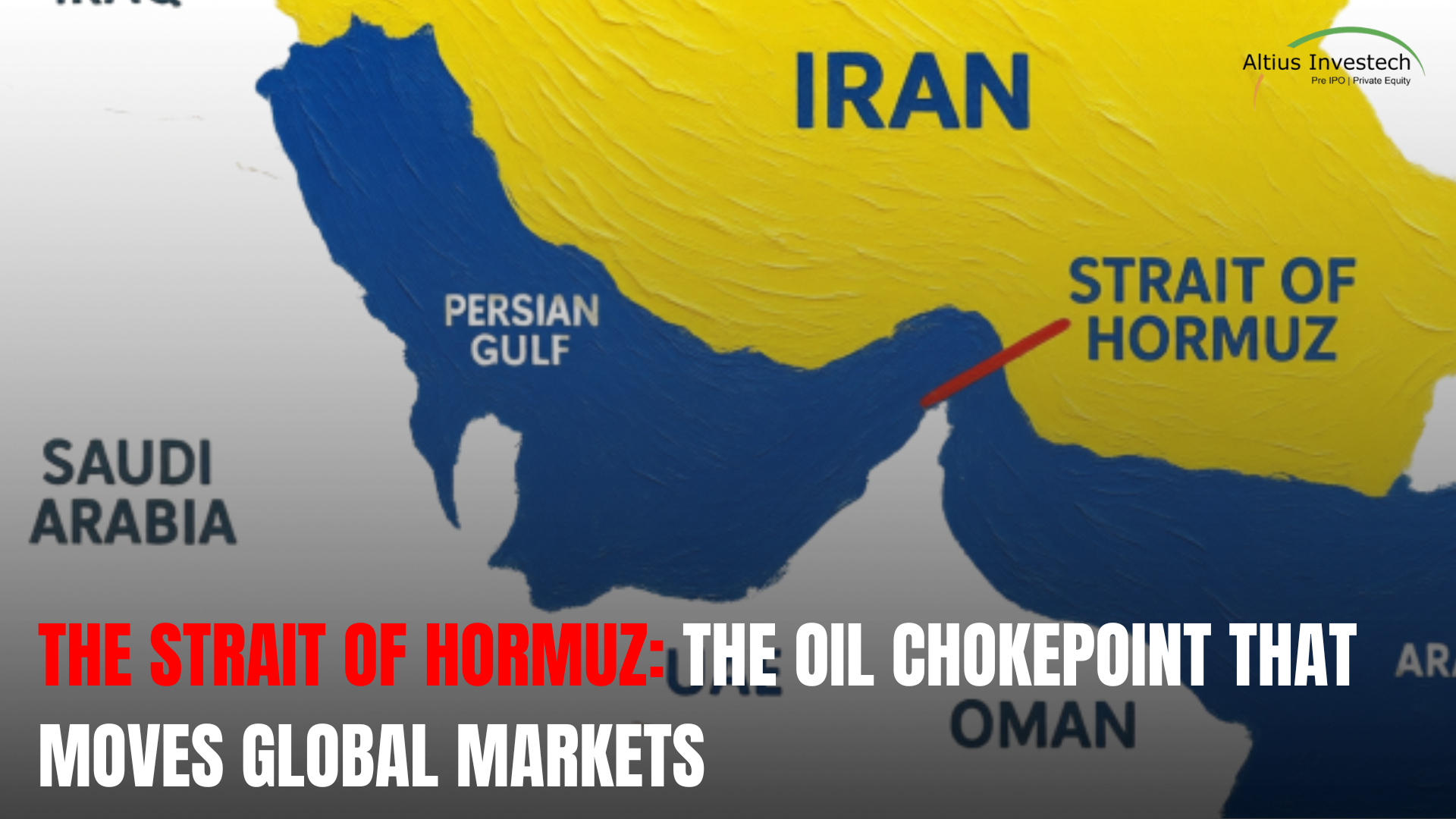
If you want to understand what drives the sudden spikes in global inflation, the volatility in your energy stocks, or the soaring costs of global shipping, you only need to look at a narrow stretch of water in the Middle East. The Strait of Hormuz is widely considered the world’s most critical maritime chokepoint. For stock market investors, commodity traders, and institutional fund managers, monitoring this waterway is not just an exercise in geopolitics—it is a fundamental necessity for risk management.
When tensions erupt in the Strait of Hormuz, the consequences are severe and immediate. Crude oil prices skyrocket, supply chains freeze, and equity markets bleed. As we navigate the unprecedented geopolitical events of early 2026, understanding this global bottleneck is more vital than ever.
What is the Strait of Hormuz?
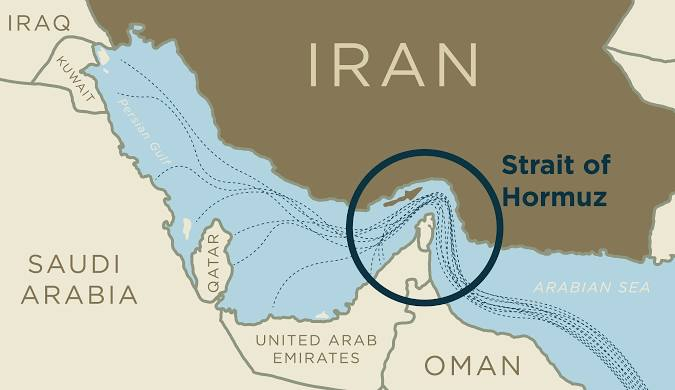
The Strait of Hormuz is a narrow, V-shaped waterway separating the Middle East’s Arabian Peninsula from Iran. Geographically, it connects the Persian Gulf to the west with the Gulf of Oman and the Arabian Sea to the southeast. The northern coastline is entirely controlled by the Islamic Republic of Iran, while the southern coastline is shared by the Sultanate of Oman and the United Arab Emirates (UAE).
The Bottleneck: At its narrowest, the strait is only 21 miles (34 kilometers) wide.
The Shipping Lanes: To prevent supertanker collisions, ships use a strict traffic separation scheme: a 2-mile inbound lane, a 2-mile outbound lane, and a 2-mile buffer.
While international law (UNCLOS) guarantees free commercial passage, the shipping lanes hug the Iranian coastline, making massive, slow-moving commercial ships highly vulnerable to military harassment, fast-attack craft, or naval mines.
Why is it Important?
Unlike the Suez Canal, you cannot simply sail around it. There are no major pipeline alternatives that can replace it.
The Commodity Lifeline: It is a massive exit route for agricultural and industrial necessities, including global fertilizer supplies, aluminum, and helium.
The Undisputed King of Oil: Approximately 20 million barrels of crude oil pass through daily. That is 20% to 25% of all globally traded seaborne oil.
The Natural Gas Hub: Qatar and the UAE rely on the Strait to export Liquefied Natural Gas (LNG). Roughly 20% of the world’s LNG transits here, powering Europe and Asian manufacturing hubs.
What is the Current Scenario? (The 2026 Crisis)
The Trigger: On February 28, 2026, the underlying structural vulnerabilities of the region erupted into a full-scale crisis. The United States and Israel carried out coordinated, massive airstrikes across Iran, targeting major nuclear and military sites. Crucially, these strikes resulted in the assassination of Iran’s Supreme Leader, Ali Khamenei.
The Blockade: Within hours of the strikes, Iran’s Islamic Revolutionary Guard Corps (IRGC) officially closed the Strait to all commercial shipping. To enforce this, Iran deployed a multi-layered denial strategy: they seeded key transit routes with naval mines, conducted physical attacks using drones and fast-attack watercraft (striking vessels like the Safeen Prestige and Skylight), and demanded illegal “protection” tolls—reportedly exceeding $1 million per vessel—for any ship attempting safe passage.
The Market Shock: The global maritime logistics network collapsed almost overnight. Daily tanker traffic, which normally averages well over 100 vessels, plummeted by 70%. Over 150 massive cargo ships and supertankers simply dropped anchor outside the strait to avoid the “kill zone.” Markets priced in the scarcity instantly, sending Brent crude oil spiking well past $100 and briefly hitting a historic $126 per barrel in March. Even an emergency release of 400 million barrels from strategic reserves by the International Energy Agency (IEA) provided only temporary relief.
The Standoff: By mid-April, diplomatic efforts completely stalled following the collapse of high-stakes U.S.-Iran negotiations in Islamabad. In a dramatic escalation on April 13, 2026, U.S. President Donald Trump authorized a comprehensive U.S. naval blockade of all Iranian ports to choke off Tehran’s export revenue. Simultaneously, a multilateral coalition of over 40 nations, spearheaded by the United Kingdom and major European powers, has begun attempting to establish military escorts to forcefully reopen the international shipping lanes.
The Reality Today: As of mid-April 2026, the geopolitical entrapment is absolute. The strait remains highly compromised, operating under an agonizingly slow, high-risk “controlled transit” system. With the U.S. blockading Iranian ports and Iran threatening regional energy infrastructure in retaliation, a massive “geopolitical risk premium” is firmly baked into all energy markets, leaving global inflation and supply chains hanging in the balance.
How Does It Affect the World?
The blockade and militarization of the Strait of Hormuz have sent shockwaves through the global macroeconomic landscape. For the world economy, this chokepoint closure translates directly into inflation and stalled growth.
Skyrocketing Freight Costs: Ships are rerouting around the southern tip of Africa (Cape of Good Hope). This adds weeks to delivery times, consumes more fuel, and creates a global shortage of available cargo ships.
The Stagflation Trap: $100+ oil acts as a global tax on consumers. Central banks are trapped: lower interest rates to save the economy (and risk hyper-inflation), or raise rates to fight inflation (and cause a recession).
The Energy Scramble: Nations are fiercely bidding for non-Middle Eastern energy, causing extreme price volatility for US shale, African crude, and South American exports.
How Does It Affect India?
For India, the world’s third-largest oil consumer, the 2026 Strait of Hormuz crisis presents a critical economic stress test. India is highly import-dependent, bringing in over 85% of its total crude oil requirements. Historically, more than half of this oil originated from the Middle East and transited through Hormuz.
1. The Current Account Deficit and the Rupee
The macroeconomic mathematics for India are punishing. Every $10 per barrel increase in global crude oil prices adds an estimated $13 billion to $15 billion to India’s annual import bill. This rapidly widens the nation’s Current Account Deficit (CAD) and places immense downward pressure on the Indian Rupee (INR). A weaker Rupee makes all other imports more expensive, importing broader inflation into the domestic economy.
2. The LPG and Domestic Fuel Crisis
While India has diversified its crude oil sources, it remains uniquely vulnerable regarding Liquefied Petroleum Gas (LPG). Over 90% of India’s LPG imports, which are the primary source of cooking gas for hundreds of millions of Indian households, pass through the Strait of Hormuz. Sustained disruptions immediately threaten domestic fuel security, forcing the Indian government to stretch its budget to subsidize cooking gas and prevent public outcry.
3. The Russian Oil Buffer
Despite the severe risks, India possesses one massive geopolitical advantage: discounted Russian oil. Since 2022, India has aggressively scaled up its procurement of crude from Russia. Because Russian tankers transit via routes that completely bypass the Strait of Hormuz, this supply acts as a vital shock absorber. Without this strategic pivot to Russian energy, the 2026 Hormuz blockade would have likely triggered a devastating domestic fuel shortage in India.
What Industries Are Affected?
For an investor, generalized fear in the market creates specific opportunities. The crisis in the Strait of Hormuz creates distinct winners and losers across various sectors of the economy. Understanding these industry dynamics is the key to hedging a portfolio.
1. Energy, Oil & Gas: Non-Middle East producers (like those in the US, Brazil, and Guyana) rake in massive windfall profits from $100+ crude. Conversely, downstream oil marketing companies face margin squeezes if price controls prevent them from passing costs to consumers.
2. Shipping & Tankers: Rerouting ships around Africa creates a severe global vessel shortage. This artificial scarcity allows freight operators to charge record-breaking daily charter rates, offsetting high insurance premiums.
3. Aviation : Jet fuel makes up 30% to 40% of an airline’s operating costs. Spiking oil prices evaporate profit margins and force ticket prices higher, which ultimately destroys passenger demand.
4. FMCG & Retail : Expensive petroleum drives up the cost of both plastic packaging and diesel logistics. To protect shrinking margins, expect companies to heavily rely on “shrinkflation” (smaller products for the same price).
5. Agriculture & Agrochemicals: Trapped Middle Eastern shipments cause massive spikes in vital fertilizer (urea/ammonia) costs. This squeezes agrochemical margins, threatens crop yields, and leads directly to higher global food inflation.
Conclusion: Navigating the Geopolitical Storm
The Strait of Hormuz is far more than a line on a map; it is the beating heart of global commerce. The historic events of 2026 have violently reminded the world that when this 21-mile waterway is choked, every corner of the global economy feels the restriction.
For the modern investor, the current crisis underscores the absolute necessity of factoring geopolitical risk into portfolio construction. As long as the diplomatic standoff and military posture in the Middle East persist, energy and shipping markets will remain highly sensitive to headline risks. Structuring investments to account for sustained higher inflation, elevated freight costs, and ongoing supply chain disruptions will be the ultimate key to preserving capital and finding growth in an unprecedented global energy shock.