“We can’t match a big tech salary, but we’ll give you a generous amount of ESOPs.”
If you’ve ever interviewed at a startup, you know the pitch. The dream is to trade a portion of your paycheck for company stock that will eventually make you wealthy. But for many employees, these options just feel like Monopoly money. They sit in an online portal, leaving you wondering: Is this actually worth anything? Can I really use this to buy a house someday?
Let’s cut through the finance jargon. Here is a straightforward guide to what ESOPs are, how they work, and how Indian startup employees are finally turning them into real cash.
What Exactly Are ESOPs?
ESOP stands for Employee Stock Option Plan.
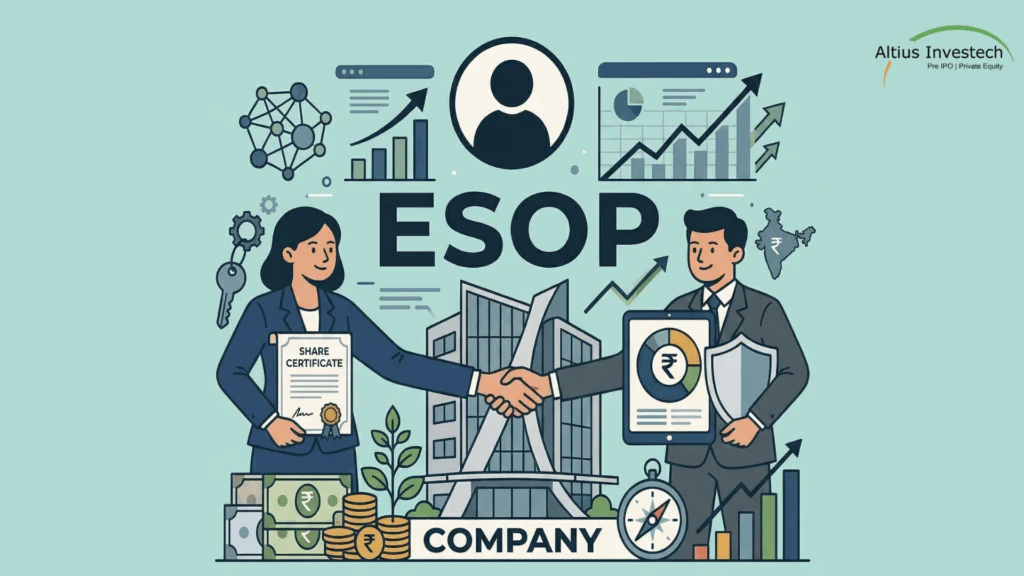
At its most basic level, an ESOP is a contract. It is a promise from your company that gives you the right to buy a specific number of company shares at a locked-in, discounted price, provided you work there for a certain amount of time.
Think of it like a really powerful, long-term discount coupon. Let’s say you join a new startup, and the company is currently valued at ₹10 per share. They give you an ESOP contract for 1,000 shares at that ₹10 price.
Four years go by. The startup is a massive success, and the shares are now worth ₹1,000 each in the real world. Because of your contract, you don’t have to pay ₹1,000. You get to use your “coupon” to buy those shares at your locked-in price of ₹10. You spend ₹10,000, and you instantly own shares worth ₹1,000,000.
To understand your offer letter, you just need to know four basic terms:
- The Grant Date: The day the company officially hands you your stock option contract.
- The Cliff: Startups want to make sure you don’t just take the stock and quit a month later. The “cliff” is a waiting period—usually your first full year. If you leave before the year is up, you get nothing. Once you hit your one-year work anniversary, a chunk of your stock becomes yours.
- The Vesting Period: This is the schedule for earning the rest of your stock. Usually, it takes four years to earn 100% of the shares promised to you. You earn a little bit more every single month you stay with the company.
- The Strike Price: This is your special, locked-in price. It’s the amount of cash you will eventually have to pay to turn your “options” into actual, legally owned shares.
The Three Main Types of Stock Plans
Companies give out stock in a few different ways depending on how big they are. Here are the three most common ones you will see:
1. Traditional Stock Options (ESOS)
This is the standard setup for early-stage startups. You are given the option to buy shares at a set price. The great thing here is that it’s entirely your choice. If the company does incredibly well, you pay your locked-in price, buy the shares, and make a profit. If the company unfortunately struggles and the share price drops, you simply choose not to buy them. You lose the opportunity, but you don’t lose your own savings.
2. Restricted Stock Units (RSUs)
As startups grow into massive, stable companies (think of the big food delivery apps or global tech giants), they usually stop offering traditional options and start handing out RSUs. An RSU is much simpler: it is a straight-up gift of shares. You don’t have to use your own money to buy them. You just have to stay at the company while they “vest” (or unlock). Once they unlock, the shares are yours to keep or sell.
3. Employee Stock Purchase Plans (ESPP)
This is essentially an exclusive company discount sale. An ESPP lets you use a small piece of your monthly salary to buy company stock at a discount—usually 10% to 15% cheaper than what the public pays. You sign up, the company sets aside a little of your paycheck for six months, and then uses that accumulated cash to buy the discounted shares for you. It’s an easy way to build a portfolio on autopilot.
Why Does This Matter for Your Wallet?
If you just rely on a standard salary, your wealth grows in a straight, predictable line. You get a paycheck, you might get a 10% raise next year, and you save what you can. Company stock changes that math completely.
- The Chance for Big Payouts: If you get in early at a successful company, your stock options can grow exponentially. While a salary pays for your rent and groceries, a successful startup payout is the kind of money that can pay off a mortgage in one day or fund an early retirement.
- Feeling Like an Owner: When you own a piece of the business, your mindset shifts. You aren’t just an employee putting in hours; you are a part-owner. When the company wins, your bank account wins.
- Forced Savings: Because stock options take years to fully unlock, they act as a fantastic long-term wealth builder. It prevents you from spending that extra value immediately and forces you to play the long game.
What’s Happening in India Startups Right Now
For a long time, the biggest complaint about startup stock in India was that you couldn’t actually spend it. Because the companies weren’t listed on the stock market, employees had shares but no way to sell them to anyone.
That has completely changed. We are now in an era where major Indian startups are actively buying the shares back from their own employees to reward them for their hard work. In 2024 alone, Indian startup employees cashed out roughly ₹1,448 crore (about $170 million).
A perfect example is Swiggy. In the summer of 2024, as they were gearing up to go public, Swiggy announced a massive $65 million (approx. ₹540 crore) program to buy back shares from their staff. Imagine working there through the tough pandemic years, putting in late nights. When Swiggy ran this program, employees could finally say, “Yes, I’d like to sell my earned shares back to you.” Hundreds of employees walked away with actual cash hitting their bank accounts—some making a few lakhs, others walking away with crores.
Meesho, the popular e-commerce app, did something very similar in early 2024. They set aside ₹200 crore to buy back shares from both current and former employees. This proves that startup stock isn’t just a fairy tale anymore; it is creating serious, life-changing wealth for regular professionals.
How to Cash Out When Your Company Is Still Private
It is great when a company like Swiggy or Meesho officially offers to buy back your shares. But what if your startup is doing really well, you have ₹50 Lakhs worth of shares sitting in your account, and the founders haven’t announced a buyback?
Normally, you would be stuck waiting for the company to eventually go for an IPO, which can take years or your vesting period to get over. You can’t just log into a normal investing app and sell private startup shares.
This is exactly the problem that Altius Investech solves.
Think of Altius as a specialized marketplace for private company stock. If you have earned shares in a recognized, fast-growing startup, Altius gives you a place to actually sell them before the company goes public.
Curious What Your Shares Are Actually Worth?
Don’t let your wealth stay locked up on a screen while you wait years for an IPO or an official company buyback. At Altius Investech, we help startup employees safely and legally cash out their ESOPs by connecting them with private investors. Contact us today to see the true market value of your shares and take control of your financial future.
Reach out to us at support@Altiusinvestech.com or call us at +91-8240614850.
Learn, more about Unlisted Companies. and ESOP liquidation
Join our Whatsapp Channel: The Market Buzz by Altius
📜 Disclaimer
(As of March 2026, from public sources & altiusinvestech.com. For educational purposes only; not investment advice. Altius Investech is not SEBI-registered; investors should do their own due diligence.)