
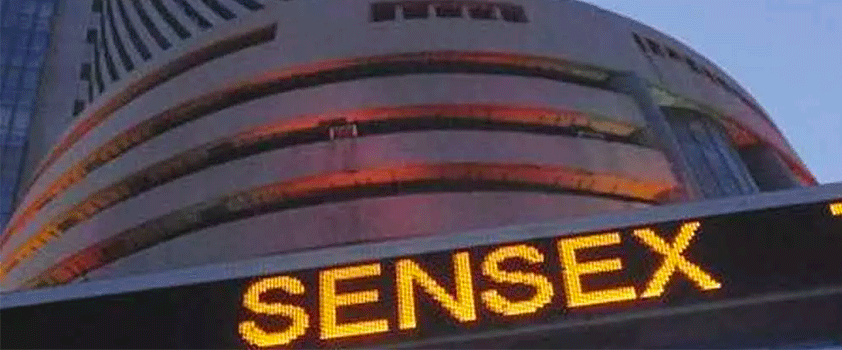
Sensex is the benchmark of Bombay Stock Exchange. Established in 1875, it is Asia’s oldest stock exchange. The index tracks the performance of 30 of the largest, most liquid, and financially robust companies listed on the BSE. These companies span a diverse range of sectors. In the fields of banking, information technology, oil, gas, pharmaceuticals, consumer goods, telecommunications, and infrastructure, they are carefully selected to reflect the broader dynamics of the Indian economy.
The Sensex serves as a market barometer, providing a snapshot of overall market sentiment and a reference point for evaluating the performance of portfolios, mutual funds, and institutional investments.
Which Companies Constitute the Sensex?
As of 2025, the Sensex includes sectoral leaders such as:
- Reliance Industries (energy & telecom)
- Tata Consultancy Services (TCS) (IT services)
- HDFC Bank (banking)
- ICICI Bank (banking)
- Infosys (IT services)
- Bharti Airtel (telecom)
- Asian Paints (consumer goods)
- Mahindra & Mahindra (automobiles)
- State Bank of India (SBI) (public sector banking)
These companies are reviewed semi-annually to ensure the index reflects the evolving economic and corporate landscape. Companies can be added or removed based on factors such as market capitalization, trading volumes, sector representation, and corporate governance standards.
The Evolution of Sensex
1986 – Birth of Sensex
- Bombay Stock Exchange launches the Sensex (Sensitivity Index) as India’s first stock market index.
- It is composed of 30 prominent companies and serves as an important symbol to reflect the performance of India’s stock market.
- Initial base year: 1978–79, set at a value of 100 points.
1991 – Economic Liberalization
- India is undergoing major economic reforms, opening up to foreign investment and privatization.
- Sensex reacts sharply, ushering in a new era of capital market growth.
- Key rally driven by sectors like banking (which evolved from public-sector dominance to private, tech-driven expansion), telecom (which leapt from long wait times to a mobile-first revolution), and manufacturing (which shifted from red-tape-bound growth to globally integrated production).
1992 – Harshad Mehta Scam
- One of India’s biggest financial scams shakes investor confidence.
- Mehta manipulated stock prices by illegally funneling funds from banks into the stock market.
- Sensex surges artificially during the scam, crossing 4,500 points, only to crash dramatically when the fraud is exposed.
- This leads to stricter regulatory reforms under SEBI (Securities and Exchange Board of India).
2000 – Dotcom Boom and Crash
- Sensex crosses the 6,000-point mark as IT and tech stocks surge during the global dotcom boom.
- Shortly after, the bubble bursts, and the index reels under severe correction, echoing global trends.
2004 – Bull Run Begins
- Supported by robust economic growth, infrastructure expansion, and foreign investment, Sensex enters a sustained multi-year bull run.
- Sensex touched 7,000 points in 2004.
2006 – 20-Year Celebration
- Sensex celebrates 20 years.
- Crosses 10,000 points for the first time in February 2006, reflecting India’s emergence as a major global investment destination.
2007 – Global Financial Optimism
- Riding global liquidity and foreign inflows, the Sensex zoomed past 20,000 points by December 2007.
- Marked by record IPOs, aggressive retail participation, and booming real estate.
2008 – Global Financial Crisis
- The Lehman Brothers collapsed, and the global credit crisis hit Indian markets hard.
- Sensex plunges from 21,000 points (Jan 2008) to under 8,000 points (Oct 2008) — wiping out nearly 60% of its market value.
2010 – Recovery and Resilience
- Supported by fiscal stimulus and economic recovery, the Sensex bounced back to cross 20,000 points again.
- Signals resilience and revival of investor confidence.
2014 – Modi Wave and Reform Optimism
- Narendra Modi’s election win sparks a strong rally.
- Sensex crosses 25,000 points post-election and accelerates to 30,000 points by March 2015 on hopes of economic reforms, infrastructure investment, and “Make in India” initiatives.
2020 – COVID-19 Crash and Rebound
- The global pandemic triggered massive panic; the Sensex crashed to 25,000 points in March 2020.
- Within months, aggressive government measures, central bank support, and digital economy growth led to a historic rebound.
- Sensex ends 2020 near 47,000 points, marking one of the sharpest recoveries globally.
2021 – All-Time Highs
- Driven by IT, pharma, financials, and retail investors, Sensex crossed 50,000 points in January 2021.
- Continue the momentum to 60,000 points by September 2021.
- India ranks among the world’s top-performing markets.
2022–2023 – Global Volatility, Local Strength
- Russia-Ukraine war, inflation fears, and U.S. Federal Reserve rate hikes create global market turmoil.
- Despite volatility, the Sensex shows resilience, buoyed by domestic consumption, technology, and renewable energy sectors.
- It ends in 2023 at around 72,000 points.
2024 – Green Energy and Digital Economy Boom
- Indian markets witness a surge in green energy stocks (Adani Green, NTPC Renewables) and digital services (Reliance Jio, Zomato, Paytm).
- Sensex scales new highs, crossing 75,000 points.
2025 – Today
- As of May 2025, the Sensex stands near 79,000–80,000 points, reflecting India’s continued rise as a global economic powerhouse.
- Key growth drivers:
- Renewable energy transition
- Manufacturing under “Made in India”
- Expansion of financial services and fintech
- Global investor appetite for emerging markets
- Rapid formalization and digitization of the Indian economy.
How is Sensex Calculated?
The Sensex, India’s benchmark stock market index on the Bombay Stock Exchange (BSE), is calculated using the free-float market capitalization method, which was adopted in 2003 to replace the older complete market capitalization approach. Instead of considering all outstanding shares of a company (including those held by promoters, insiders, or government entities), the free-float method focuses only on shares available for public trading, offering a more accurate reflection of market sentiment and liquidity.
The formula used is,
Free-Float Market Capitalization = Total Market Capitalization × Free-Float Factor,
where total market capitalization is the share price multiplied by the total number of outstanding shares, and the free-float factor represents the proportion of shares actively available for public trade.
This method ensures that companies with a larger share of actively traded stocks have a proportionately greater influence on the index while making the Sensex a reliable indicator of real market movements and investor confidence in India’s top 30 listed companies.
Sensex vs. Nifty 50: A Comparative View
While Sensex is the hallmark index of the BSE, India’s other major stock exchange, the National Stock Exchange (NSE), maintains the Nifty 50, which tracks 50 leading companies.
| Feature | Sensex (BSE) | Nifty 50 (NSE) |
| Exchange | Bombay Stock Exchange | National Stock Exchange |
| Constituents | 30 Leading Companies | 50 Leading Companies |
| Weighting Methods | Free-float Market Cap | Free-float market cap |
| Latest Level | ~82,578 (up ~0.47% at present) | ~25,128 (up ~0.50%) |
| Investor Use | Gained ~400 pts this session; driven by banks and autos. | Surpassed 25,100; strong buying across sectors. |
| Recent Trend | Broad market barometer, favoured by institutions. | Popular retail & professional gauge for stocks. |
Final thoughts
With India’s financial markets becoming more sophisticated and globalized, the Sensex remains a valuable indicator of understanding India’s economic health and equity market dynamics.
Tracking the Sensex is essential for institutional investors, portfolio managers, analysts, and policymakers in making informed decisions, risk evaluation, and capital allocation.
A vivid understanding of the Sensex can give retail investors an upper hand when assessing investment opportunities or managing personal portfolios.
As India’s economy matures, diversifies, and integrates into global markets, the Sensex will remain an invaluable barometer of market performance, investor sentiment, and corporate development.
Get in touch with us
For any query/ personal assistance feel free to reach out at support@Altiusinvestech.com or call us at +91-8240614850.
To know, more about Unlisted Company. Contact Us.
You can also checkout the list of Best 5 Unlisted Shares to Buy in India
For Direct Trading, Contact Us.
To know more about How to apply for an IPO? Contact Us.
Read More