

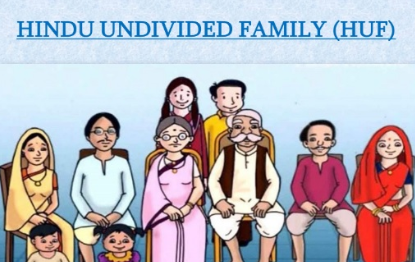
Succession Planning in HUFs: Securing a Legacy with Clarity
Under Indian law, the Hindu Undivided Family (HUF) is a special legal organization that aids families in managing and preserving money over the course of several generations. However, to guarantee a seamless transfer of assets and duties, appropriate succession planning is necessary. Conflicts and legal issues may surface in the absence of a clear succession plan, causing the family to experience both financial and emotional strain. The main facets of HUF succession planning are examined in this blog, along with practical advice for families.
Understanding the Structure of an HUF
A Hindu Undivided Family (HUF) comprises a Karta, who is the head of the family, and coparceners, who are members with inheritance rights. The Karta is responsible for managing the HUF’s affairs, including investments, tax filings, and property dealings. Coparceners hold the right to claim a share in the HUF’s assets. Succession planning is crucial to ensure the smooth transfer of rights and responsibilities within the HUF. This not only preserves family wealth but also maintains legal and financial transparency for future generations, helping the HUF continue functioning efficiently across generations.
Key Considerations in HUF Succession Planning
1. Role of the Karta and Its Succession
- The oldest male member of a Hindu Undivided Family (HUF) is traditionally known as the Karta, and he is responsible for overseeing the administrative, legal, and financial matters of the HUF. However, daughters were given equal coparcenary rights, enabling them to likewise take on the role of Karta following the 2005 revision to the Hindu Succession Act. In addition to ensuring greater gender equality in inheritance and property matters, this progressive transformation has enabled women to assume leadership responsibilities within the family structure.
- Usually, when the current Karta retires or dies, the Karta’s duties are transferred. The coparcener with the most seniority is usually selected to succeed. Nevertheless, disagreements may occasionally result from this procedure, particularly in large families or when several people are qualified.
2. Partition of the HUF
A legal division in which assets are shared among the coparceners might dissolve a Hindu Undivided Family (HUF). This division may be partial, in which case the HUF remains intact for the remaining members, or total, in which case the HUF is completely dissolved. The unanimous permission of all coparceners and appropriate legal papers detailing the asset division is necessary for any partition to be deemed legally valid.
Legal clarity regarding ownership and obligations among family members is provided by making sure the procedure is well-documented and accepted, which also helps to avoid future disagreements.
3. Creating a Will for HUF Assets
Although they do not have complete ownership of HUF property, the Karta is the family’s manager and spokesperson in a Hindu Undivided Family (HUF). Because the HUF’s assets are collectively owned by all coparceners, the Karta is unable to distribute or bequeath HUF property as they see fit. It would be illegal for the Karta to try to include HUF assets in a personal will because they belong to all qualified coparceners collectively.
Nonetheless, each coparcener is entitled to make a will for their own portion of the HUF property. Until a partition occurs, this share is not set, but once it is, the coparcener can indicate how their share should be divided following their death.
4. Taxation Aspects of Succession
Depending on the kind and value of assets divided among the coparceners, capital gains tax may be imposed during a Hindu Undivided Family (HUF) division. The next designated Karta will be in charge of filing income taxes, keeping financial records, and making sure that all legal requirements are met if the HUF is still in existence after the Karta’s death.
Penalties or legal issues may arise if this isn’t done. A legal continuation of the HUF’s financial affairs can be ensured, and the family’s financial burden can be greatly lessened with proper tax preparation throughout transitions like succession or partition.
5. Legal Framework and Recent Changes
- The Hindu Succession (Amendment) Act, 2005, granted daughters equal rights in HUF property.
- Courts have upheld that even if a father (Karta) dies before 2005, daughters are entitled to their rightful share in the HUF.
- Awareness of legal rights ensures that all members receive fair treatment in the succession process.
Best Practices for Smooth HUF Succession
- Define the next Karta in advance: Families should decide and document the future Karta to avoid conflicts.
- Keep accurate records: By maintaining proper tax filings, property files and records and detailed financial accounts one can ensure transparency in succession.
- Legal consultation: Getting professional legal advice can help you navigate the challenges of HUF succession planning.
- Talk to your family: Discuss succession planning in writing to avoid misunderstandings and conflicts.
Conclusion
Depending on the kind and value of assets divided among the coparceners, capital gains tax may be imposed during a Hindu Undivided Family (HUF) division. The next designated Karta will be in charge of filing income taxes, keeping financial records, and making sure that all legal requirements are met if the HUF is still in existence after Karta’s death.
Penalties or legal issues may arise if this isn’t done. A smooth and legal continuation of the HUF’s financial affairs can be ensured and the family’s financial burden can be greatly lessened with proper tax preparation throughout transitions like succession or partition.
Need Help with HUF?
Fill out our interest form today, and let the experts at Altius handle everything for you!
If you’re unsure where to start, our experts at Altius are here to guide you every step of the way. Ready to cut taxes and grow wealth the smart way?
👉 Fill out this form or Book a Slot Now to get started on securing your legacy!